100 New Beds Added in a Multi-specialty Hospital in Jaipur

ManglamPlus Medicity Hospital Expands with 100 New Beds – Strengthening Multispecialty Care in Jaipur

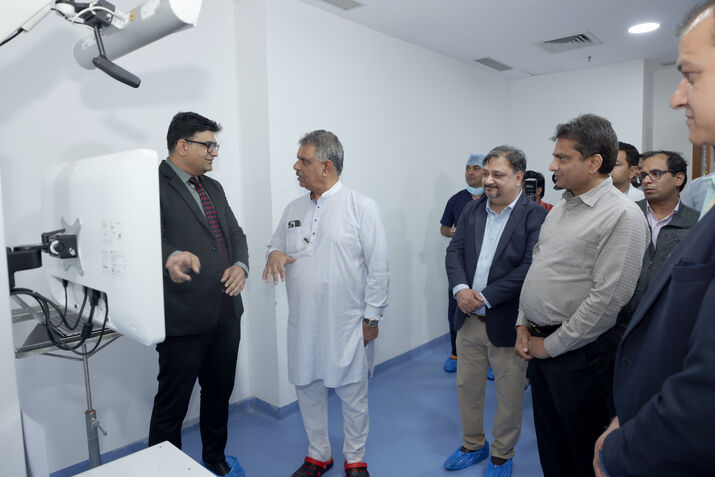
ManglamPlus Medicity Hospital, one of Jaipur’s leading multispecialty healthcare institutions, has taken a significant step forward in patient care and infrastructure expansion. On 4th June 2025, the hospital inaugurated 100 additional beds, marking a major milestone in its mission to deliver world-class medical treatment to the people of Rajasthan. The inauguration ceremony was graced by the Honourable Health Minister of Rajasthan, Shri Gajendra Singh Ji, who appreciated the hospital’s vision and commitment to strengthening the healthcare ecosystem in the state.
Knee Replacement Doctor in Jaipur
Total Knee Replacement in Jaipur
Partial Knee Replacement in Jaipur
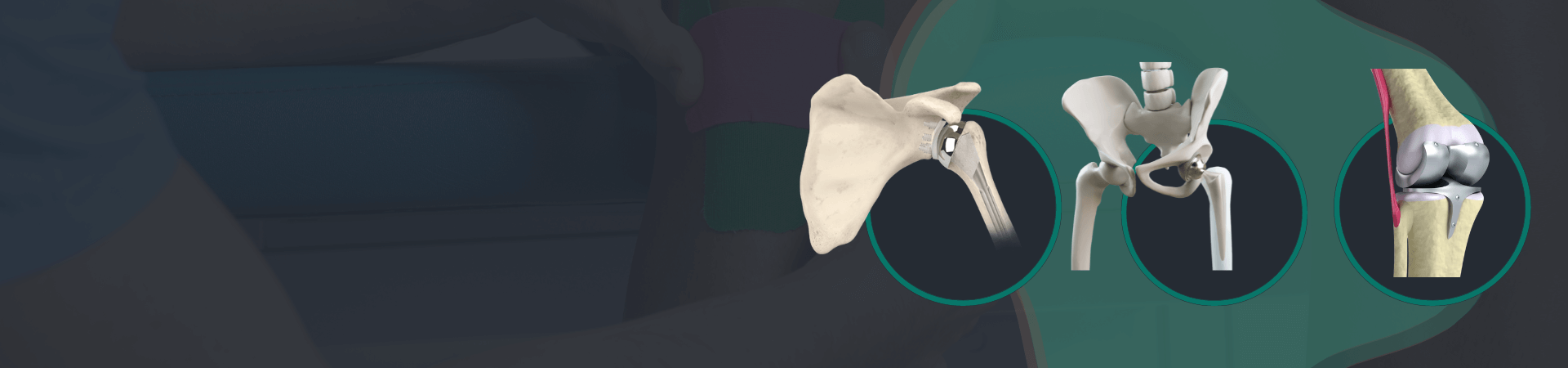
Joint Replacement Surgery in Jaipur
Best Knee Replacement Surgeon Jaipur

Better facility in a Multispeciality Hospital for Joint Replacement in Jaipur

  • The newly added beds will help accommodate the growing demand for quality care, enabling timely treatment and better patient outcomes across a wide range of specialties—from orthopedics, cardiology, and critical care to neurology, nephrology, and more.

Best Hospital in Jaipur, is committed to quality care

This expansion not only reflects the hospital’s commitment to growth but also addresses the increasing need for accessible, high-quality healthcare facilities in Jaipur and surrounding regions. Robotics by Dr. Khatri, the joint replacement center at Mangalam Mediplus Hospital in Mansarovar Jaipur is the pioneer in ‘robotic knee replacement surgery’. It is headed by Dr S S Khatri, Head of the Department of Orthopedics and also a senior Doctor who is an expert in Robotics surgery. The surgery is very well established in this part of the world and this is a breakthrough in the modern orthopedics. You may call for appointment on +9186960-97555.

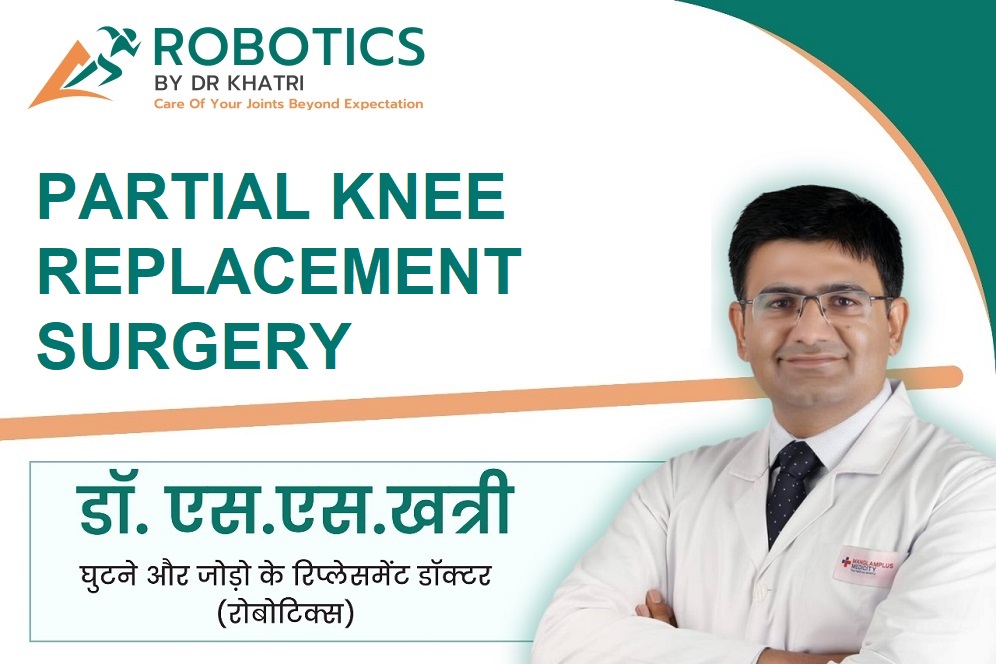
Unicondylar – Partial Knee Replacement Surgery

Save your knee and still be active – Robotics partial knee replacement

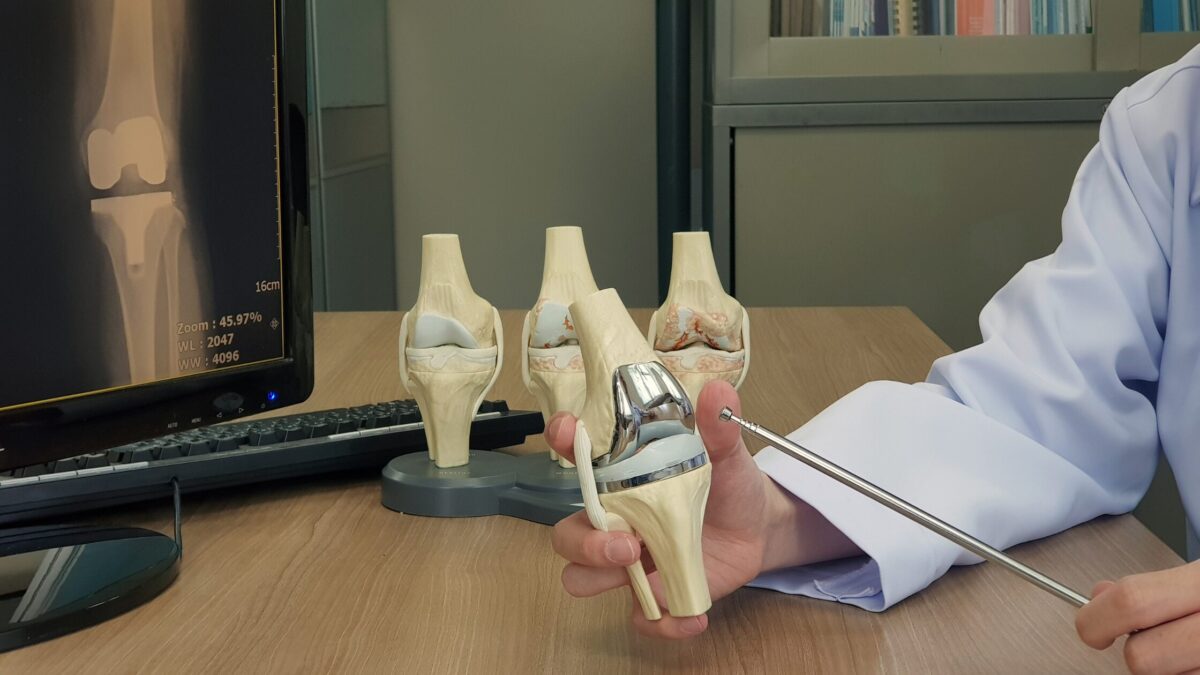
Unicondylar knee replacement, also known as partial knee replacement, is a surgical procedure that replaces only the damaged portion of the knee joint, leaving the healthy parts intact. The knee has three compartments: medial (inner), lateral (outer), and patellofemoral (front). Unicondylar knee replacement targets one of these compartments affected by osteoarthritis. The robotic method enhances the precision and accuracy of this procedure. Nowadays young patients who are in the middle age group are opting to go for ‘Partial or Unicondylar’ knee replacement and save the knee.  

So what is the indications for Robotic Partial Knee Replacement?

  • This is the primary indication, where arthritis is limited to only one compartment of the knee (most commonly the medial compartment). The procedure is typically recommended when the arthritis in the affected compartment is causing significant pain and functional limitations despite non-surgical treatments. The knee should be relatively stable with minimal deformity.

What are Benefits of Robotic Unicondylar/Partial Knee Replacement Surgery for Patients

  • Smaller Incision: Robotic assistance often allows for a smaller incision compared to traditional open surgery, leading to less scarring and potentially faster healing.
  • Less Tissue Injury: With enhanced precision, there is less disruption to the surrounding muscles, tendons, and ligaments.
  • Less Bone Removal: Only the damaged bone and cartilage in the affected compartment are removed, preserving more of the natural knee structure.
  • Precise Implant Placement: The robotic system provides the surgeon with real-time feedback and guidance, leading to more accurate positioning and alignment of the implant. This can improve the longevity and function of the knee replacement.
  • Potentially Shorter Hospital Stay: Due to the minimally invasive nature and quicker recovery, some patients may have a shorter hospital stay.
  • Quicker Recovery: Patients often experience less postoperative pain and can return to their daily activities sooner compared to a total knee replacement.
  • More Natural Feeling Knee: By preserving the healthy parts of the knee, many patients report a more natural feel and movement of their replaced knee.
  • Option for Total Knee Replacement Later if Needed: If arthritis progresses to other compartments in the future, a total knee replacement can still be performed.
  • Reduced Risk of Complications: The precision of the robotic technique may contribute to a lower risk of complications such as infection and blood clots.
  • Improved Implant Longevity: Accurate implant placement can lead to less wear and tear on the artificial joint, potentially increasing its lifespan.
In summary, robotic unicondylar knee replacement offers a targeted and precise approach to treating single-compartment knee arthritis, potentially leading to a faster recovery, more natural knee function, and improved long-term outcomes compared to traditional methods. Robotics by Dr. Khatri, the joint replacement center at Mangalam Mediplus Hospital in Mansarovar Jaipur is the pioneer in ‘partial knee replacement by Robotics method’. It is headed by Dr S S Khatri, Head of the Department of Orthopedics and also a senior Doctor who is an expert in Robotics surgery. The surgery is very well established in this part of the world and this is a breakthrough in the modern orthopedics. You may call for appointment on +9186960-97555.

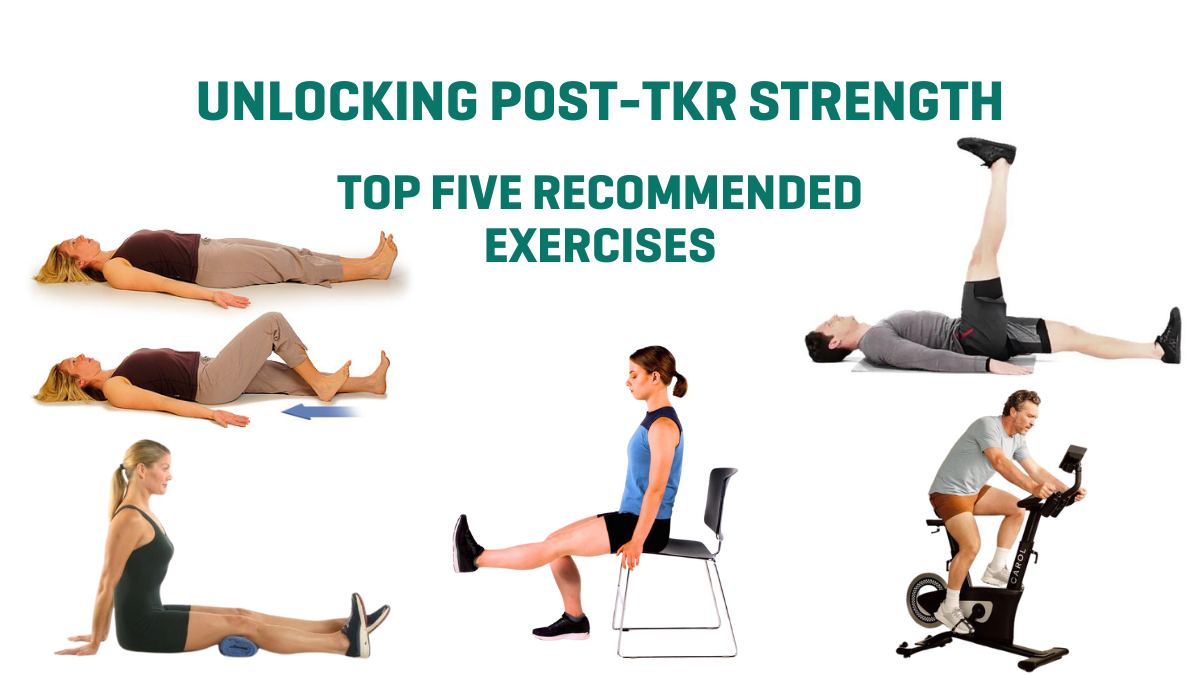
Unlocking Post-TKR Strength: Dr. S. Khatri’s Top Five Recommended Exercises

Introduction: Undergoing a Total Knee Replacement (TKR) is a transformative journey that requires commitment, patience, and a comprehensive rehabilitation plan. Dr. S. Khatri, a renowned orthopedic surgeon, understands the significance of a tailored exercise routine to ensure a successful recovery post-TKR. In this blog, we’ll explore the top five exercises recommended by Dr. S. Khatri to help you regain strength, flexibility, and mobility after your Total Knee Replacement. Quadriceps Setting: Building the Foundation Quadriceps setting is a foundational exercise crucial for strengthening the quadriceps muscles, which play a vital role in knee stability. This exercise involves contracting the muscles at the front of your thigh while keeping your leg straight. Dr. S. Khatri emphasizes the importance of starting with gentle contractions and gradually increasing intensity. This exercise not only promotes muscle activation but also aids in reducing swelling and improving blood circulation around the knee joint.
Straight Leg Raises: Targeting Core Muscles Once you’ve mastered quadriceps setting, straight leg raises become the next step in your rehabilitation journey. This exercise engages the quadriceps and core muscles while promoting hip flexor strength. Dr. S. Khatri advises starting with a gradual lift, ensuring controlled movements to avoid unnecessary strain. Straight leg raises are instrumental in enhancing overall leg strength and stability.
Heel Slides: Restoring Flexibility Maintaining and improving joint flexibility is key after a TKR, and heel slides are an excellent exercise for achieving this. Dr. S. Khatri recommends this low-impact movement to gently bend and straighten your knee. By incorporating heel slides into your routine, you can enhance the range of motion in your knee joint, ultimately contributing to improved mobility and reduced stiffness.
Seated Knee Extension: Targeted Strengthening Seated knee extensions are effective in isolating and strengthening the quadriceps muscles. Dr. S. Khatri suggests performing this exercise while seated on a sturdy chair, extending your leg forward with controlled movements. This exercise not only enhances muscle strength but also aids in regaining confidence in weight-bearing activities. It’s essential to start with a comfortable range of motion and gradually progress as your strength improves.  
Stationary Bike: Cardiovascular Fitness As you progress in your recovery, incorporating cardiovascular exercises becomes crucial for overall fitness. Dr. S. Khatri often recommends the stationary bike as a safe and effective option. Cycling helps improve cardiovascular health, boosts stamina, and enhances joint mobility without putting excessive stress on the knee. Start with a slow pace and gradually increase the intensity as your strength and endurance improve.     Conclusion: Recovery after Total Knee Replacement requires a holistic approach, and Dr. S. Khatri’s recommended exercises are designed to address various aspects of rehabilitation. It’s crucial to consult with your healthcare provider before starting any exercise routine and to progress at your own pace. By incorporating these exercises into your daily routine, you’ll be on the path to regaining strength, flexibility, and a renewed sense of well-being after your TKR.

घुटनों की रिप्लेसमेंट कब ज़रुरत पड़ सकती है ?

घुटने की रिप्लेसमेंट सर्जरी (जिसे घुटने की आर्थोप्लास्टी के रूप में भी जाना जाता है) एक प्रकार की सर्जरी है जो घुटने के दर्द को दूर करता है तथा पूर्ण रूप से क्षतिग्रस्त घुटनों की कार्यप्रणाली को पुनः सामान्य करता है। यह एक शल्यक्रिया (ऑपरेशन) है जिसमें डॉक्टर घुटनों की क्षतिग्रस्त हड्डियां एंव कार्टिलेज (जांग की हड्डी, पैर की हड्डी एंव टकने की हड्डी ( Knee Cap ) को कृत्रिम अंग (Prosthesis) जो कि मिश्र धातु, उच्च स्तरीय प्लास्टिक एंव पॉलीमर का बना होता है, उससे बदल दिया जाता है। घुटनों कि रिप्लेसमेंट कराने की आवश्यकता मुख्य रूप से आर्थराइटिस (गठिया) से पीड़ित रोगी को पड़ती है। गठिया (आर्थराइटिस) एक ऐसी बीमारी है जिसमें घुटने में उपस्थित कार्टिलेज (जो कि घुटनों में घर्षण रहित मूवमेंट करवाती है), टूटने लगती है। जिसके परिणाम स्वरूप घुटने कि हड्डियां एक दूसरे से रगड़ खाना शुरू कर देती हैं जो कि काफी दर्दनाक होता है। इसके इलावा, घुटनों को हानि पहुँचाने वाले दूसरे रोग हैं: रहूमटॉइड ( rheumatoid ) आर्थराइटिस – एक ऐसी स्थिति जिसमें घुटनों में इन्फ्लामेशन होने लगता है। इसके इलावा, ट्रॉमेटिक (traumatic) आर्थराइटिस जिसमें घुटनों को किसी चोट या दुर्घटना के कारण नुकसान पहुँचता है। डॉ. एस.एस. खत्री ( वरिष्ठ चिकित्सक, सलाहकार, आर्थोप्लास्टी, आर्थोस्कोपी) के अनुसार ये सभी स्थितियां घुटनों के दर्द को धीरे-धीरे बढ़ाने के लिए जिम्मेदार होती है और समय के साथ यह समस्या ओर गंभीर एंव दर्दनाख हो जाती है। एक जॉइंट रिप्लेसमेंट सर्जन आपके घुटनों की स्थिति, घुटनों की चाल, घुटनों के टेढ़ापन एंव दर्द के स्तर को देखने के बाद रिप्लेसमेंट का निर्णय लेता है। क्षतिग्रस्त घुटने को जांचने के लिए सामान्यता x ray एंव MRI की ज़रूरत पड़ती है। घुटनों की रिप्लेसमेंट (Partial & Complete) सर्जिकल तकनीक एंव कृत्रिम अंग (Prosthesis) बहुत सारे घटकों से प्रभावित होते हैं जैसे उम्र, लिंग, वज़न, एक्टिविटी लेवल एंव शारीरिक कार्य, घुटने की साइज, शेप तथा कोई पुरानी मेडिकल हिस्ट्री आदि। जब घुटनों को अधिक नुकसान पहुँच चुका होता है जिसके कारण चलना-फिरना, सीढ़ियाँ चढ़ना-उतरना और अपनी आम ज़िन्दगी जीना मुश्किल हो जाता है तब प्रायः घुटनों का रिप्लेसमेंट ही एक आखरी रास्ता बचता है।

घुटने की रिप्लेसमेंट सर्जरी के लिए सही समय तय करने के संकेतः

  • दर्द कम करने के लिए दवाओं का कोई प्रभाव ना हो।
  • जब कोर्टिसोन इंजेक्शन, चिकनाई इंजेक्शन, आराम, और फिजियोथेरेपी जैसे उपचार आपके दर्द को कम करने के लिए अप्रभावी हों।
  • रोजमर्रा के काम करने में कठिनाई होना और दर्द का सामना करना, जैसे कि स्नान करना, बिस्तर से बाहर निकलना, कुर्सी से उठना या सीढ़ियों पर चढ़ना।
  • चलने के लिए एक वॉकर या किसी तीसरे व्यक्ति की सहायता की आवश्यकता होना ।
  • चाल बिगड़ना और घुटनों का टेढ़ापन ।
  • जब पूरा दिन बैठे या लेटे रहने पर भी गंभीर दर्द का अनुभव होना।
  • घुटने में चोट या आर्थराइटिस की वजह से।
  • 55 वर्ष से अधिक उम्र के लोगों में घुटनों के बदलने की आवश्यकता ज्यादा होती है। हालांकि, सभी उम्र के रोगियों का सफलपूर्ण घुटने का रिप्लेसमेंट संभव है।

सर्जरी न होने से हो सकता है:

  • घुटने में दर्द जो अजीबो गरीब चलने की शैली का कारण बन सकता है और यह आपके कूल्हे और रीढ़ की हड्डी को भी ख़राब कर सकता है।
  • मांसपेशियों और लिगामेंट्स में कमजोरी आ जाती है और समय रहते न इलाज करवा जाये तो यह काम करना बंद कर देते हैं।
  • दर्द में वृद्धि और घुटनों का सही कार्य ना कर पाने की वजह से सामान्य दैनिक गतिविधियों में कठिनाई होना। नार्मल चलने में, वाहन चलाने में और घर का काम काज करने में बहुत दर्द होना।
  • निष्क्रिय जीवन शैली (इनएक्टिव लाइफस्टाइल) के कारण समग्र स्वास्थ्य में गिरावट।
  • गतिशीलता में कमी के कारण उदासी और अवसाद (डिप्रेशन)।
  • कॉम्प्लिकेश्न् जो भविष्य में सर्जरी के अलावा कोई ओर विकल्प नहीं छोड़ता है।
इन सभी कारणों के कारण किसी भी व्यक्ति के जीवन की गुण्वत्ता का स्तर कम हो सकता है और इससे उनकी भावनात्मक ( इमोशनल) और शारीरिक (फिजिकल) स्थिति पर बुरा प्रभाव पड़ सकता है। लगातार क्षतिग्रस्त जोड़ों के निरंतर उपयोग से, कूल्हे के जोड़ों और कमर के जोड़ों पर भी नुकसान पहुँचता है। समय रहते की गई सर्जरी वाले मरीजों की सफलता दर अधिक है और इसके अलावा घुटने, अधिक महीनों और वर्षों तक प्रभावी ढंग से काम करते हैं। रोगी को सर्जरी के बाद अस्पताल में 1-3 दिन बिताने की जरूरत होती है, और सामान्य गतिविधियों में वापस आने में 6 सप्ताह का समय लगता है। ज्यादातर लोग 3 से 6 सप्ताह के बाद फिर से अपने वाहन चलाने में सक्षम होते हैं। छोटी उम्र के लोग जिनकी घुटने की सर्जरी हुई है, उनमें पुनः सर्जरी (Revision) की आवश्यकता अधिक होती है, क्योंकि वे अपने घुटने के जोड़ पर अधिक ज़ोर डालते हैं।

सर्जरी के लिए सबसे उपयुक्त समय ?

यदि आपके सलाहकार सर्जन या डॉक्टर आपको बताते हैं कि आप सर्जरी से लाभान्वित हो सकते हैं, तो ये जल्द से जल्द कराने पर विचार करें। निम्नलिखित कारक सर्जरी के सही समय पर कुछ प्रकाश डाल सकते हैं:
  • सर्जरी किसी भी मौसम में की जा सकती है।
  • पैसों की व्यवस्था और सर्जरी का खर्चा। घुटनों के इम्प्लांट (कंपनी) के उपयोग के बारे में जानकारी।
  • आपको अस्पताल लाने और ले जाने के लिए किसी की उपलब्धता।
  • रिकवरी के दौरान भोजन और अन्य दैनिक गतिविधियों में आपकी मदद करने के लिए किसी की उपलब्धता।
  • सर्जरी के बाद पहले कुछ दिनों के लिए बच्चों, पालतू जानवरों और अन्य आश्रितों की मदद करने के लिए किसी का होना।
  • आपकी देखभाल करने वाले के साथ सर्जरी और रिकवरी की तारीखें मैच करना।
  • सर्जरी के लिए सर्जन या चिकित्सक की उपलब्धता।

Knee Replacement, when do you need it ?

Knee replacement surgery (also known as knee arthroplasty) is a treatment that can help relieve pain and restore normal functioning of severely damaged knee joints. It is a surgical operation that involves replacement of damaged bone and cartilage from thighbone, shinbone and kneecap with an artificial joint (prosthesis) made of metal alloys, high- grade plastics and polymers. Knee replacements are needed by people having osteoarthritis a condition where the cartilage (tissue) that cushions the knee joint wears away. As a result of this, the knee bone starts rubbing against each other, which is quite painful. People suffering from rheumatoid arthritis – a disease – that causes chronic joint inflammation, may also need a knee replacement. Others may have had an injury causing knee pain and limiting its movement. All these conditions are responsible for causing gradual increase of knee pain, thus making it worse, over a long period of time, said Dr. S S Khatri, Senior Consultant, Arthroplasty, Arthroscopy & Complex Trauma. The decision of having a surgery is rightly taken by an orthopedic surgeon after analysing the condition of your knee in terms of range of motion, stability, strength and pain level. The extent of damage is usually monitored with the help of X-ray or MRI scan. Many factors influence the choice of knee replacement prostheses and surgical techniques considering the age, sex, weight, body’s activity level or physical function, knee size and shape and overall health history.

Signs to decide the right time for a knee replacement:

  • No effect of Medications to ease the pain.
  • Treatments like cortisone injections, lubricating injections, rest, and physical therapy are ineffective to reduce your pain.
  • Facing difficulty and pain in performing everyday tasks, such as bathing, getting out of bed or a chair, or climbing stairs.
  • Need the aid of a walker to walk around.
  • Level of deformity and gait balance.
  • The pain is severe throughout day and night even when you’re sitting still or lying down.
  • Your knee has deformed from an injury or arthritis.
  • People with age > 55 years are more likely to get knees replaced. However, successful knee replacements are possible on patients of all ages.

Not having surgery can lead to:

  • Knee pain that can cause awkward walking style and this may further affect your hips and spine.
  • Weakness in muscles and ligaments and if untreated, it can cause loss of function.
  • Difficulty in normal daily activities due to increase in pain and a loss of functionality.
  • It may become very tough to walk, drive, and do household chores.
  • Decline in overall health, due to an increasingly inactive lifestyle.
  • Sadness and depression due to decreased mobility.
  • Complications that may leave no option other than surgery in the future.
A person’s quality of life can be reduced due to all of these issues and this may have a negative impact on their emotional and physical condition.Continued use of damaged joints will likely lead to further deterioration and damage. Patients having surgeries performed at the initial stage can have higher success rates with the knee functioning more effectively in the months and years ahead. The patient needs to spend 1-3 days in the hospital after surgery, and it can take 6 weeks to get back to normal activities. Most people are able to drive again after 3-6 weeks. Younger people who have knee surgery are more likely to need a revision, as they put more wear and tear on their knee joint.

When is the best time for knee replacement surgery?

If your consultant tells you that you might benefit from surgery, it is worth considering doing it as soon as possible. The following listed factors can give some guidance on deciding a date for the surgery:
  • Surgery can be conducted any season.
  • Idea on the cost, and arranging the funds.
  • Knowledge about the type of company’s implant used.
  • Availability of someone to take you to and from the hospital.
  • Someone to help you with meals and other daily activities during recovery.
  • Find someone to help with children, pets, and other dependents for the first few days.
  • Fit the surgery and recovery dates with your caregiver’s schedule
  • Availability of the surgeon or doctor for the follow up,

ऑस्टियोआर्थराइटिस से छुटकारा चाहिए तो यह खाएं

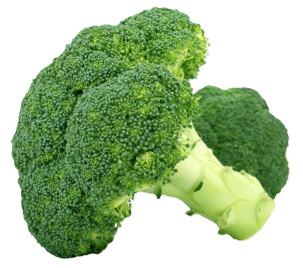
ऑस्टियोआर्थराइटिस का मतलब घुटने के जोड़ो में दर्द। ऑस्टियोआर्थराइटिस जोड़ों में दर्द और जकड़न पैदा करने वाली बीमारी है। यूं तो इसका कोई पूर्ण उपचार संभव नहीं है परंतु अगर समय रहते रोग पकड़ में आ जाये तो अनेक प्रकार के उपचारों द्वारा इसकी रोकथाम की जा सकती है। यह रोग मुख्यतः जोड़ों की हड्डियों के बीच रहने वाली आर्टिकुलर कार्टिलेज (कड़ी लचीली हड्डी ) को नुकसान देता है। कुछ आहार (खाद्य पदार्थ) आपके जोड़ों की देखभाल करने में मदद कर सकते हैं। हालांकि किसी विशिष्ट खाद्य अथ्वा पोषण पूरक पदार्थों से ऑस्टियोआर्थराइटिस का इलाज करना असंभव है, लेकिन, आर्धाइटिस फाउंडेशन के अनुसार, आपके आहार में कुछ खाद्य पदार्थ रोग से जुड़े दर्द, जकड़न और इंफ्लामेशन जैसे लक्षणों को कम करते हैं। कुछ खाद्य पदार्थों में इंफ्लामेशन रोकने की क्षमताएं होती हैं जो इन लक्षणों को कम करने में मदद करते हैं जबकि अन्य खाद्य पदार्थ उन्हें बढ़ा सकते हैं। इस प्रकार एक सही आहार जो इंफ्लामेशन रोकने वाले खाद्य पदार्थों से समृद्ध है, ऑस्टियोआर्थराइटिस को बेहतर बनाने में मदद करता है। आहार में विशेष खाद्य पदार्थों को शामिल करके, हड्डियों, मांसपेशियों और जोड़ों की शक्ति और स्वास्थ्य को बढ़ाया जा सकता है। इसके अलावा वे इंफ्लामेशन और बीमारी से निपटने के लिए शरीर की मदद करते हैं।

आप क्या खाएं

मछली का तेल इंफ्लामेशन रोकने वाले गुणों के साथ ओमेगा-3 फैटी एसिड का एक प्रमुख स्रोत है। ऑस्टियोआर्थराइटिस से पीड़ित मरीजों को अपने आहार में प्रति सप्ताह मछली का तेल प्रयोग करना चाहिए। जो लोग मछली नहीं खाते, वे ओमेगा-3 से भरपूर डाइट सप्लिमेंट जिनमें मछली के तेल, क्रिल तेल या अलसी के तेल का उपयोग कर सकते हैं। इंफ्लामेशन से लड़ने में सक्षम अन्य ओमेगा-3 स्रोतों में चिया बीज, अलसी का तेल और अखरोट शामिल हैं। तेलः वनस्पति तेल से बने उत्पादों का चयन करें, जैसे कि जैतून का तेल ( Olive Oil) इंफ्लामेशन को कम करने में मदद करता है। एक्स्ट्रा वर्जिन ओलिव आयल जैसे तेलों में ओलेओकैंथल के उच्च स्तर होते हैं, जिसमें एंटी इंफ्लेमेटरी दवाओं के समान गुण होते हैं। दुग्ध उत्पादः कैल्शियम और विटामिन डी से भरपूर खाद्य पदार्थ जैसे दूध, दही और पनीर, हड्डियों की ताकत बढ़ाते हैं, जो आगे चलकर दर्द को कम करने में मदद करते हैं। डेयरी उत्पाद प्रोटीन से भी समृद्ध होते हैं जो मांसपेशियों के निर्माण में मदद करते हैं। इसके इलावा मोटापे से परेशानी का सामना करने वाले लोग कम फैट वाले डेरी आहार चुन सकते हैं। हरी सब्जियाँः गहरे रंग की पत्तेदार हरी सब्जियाँ जैसे पालक, गोभी, कोलार्ड, चार्ड आदि में विटामिन डी, एंटीऑक्सिडेंट और इंफ्लामेशन से लड़ने वाले फाइटोकेमिकल्स भरपूर होते हैं। विटामिन डी कैल्शियम एब्सॉर्शन के लिए आवश्यक है और इम्यून सिस्टम को मजबूत बनाता है और शरीर को संक्रमण से लड़ने में मदद करते हैं। ब्रोकलीः विटामिन सी, विटामिन के, प्रोटीन और कैल्शियम से भरपूर ब्रॉकली में सल्फोराफेन नामक पदार्थ होता है। कई शोधों के अनुसार माना जाता है कि यह ऑस्टियोआर्थराइटिस को बढ़ने से कम या मध्यम करने में मदद करता है। आप चाहे तो ब्रॉकली की स्वादिष्ट और हेल्दी रेसिपी को अपना सकते हैं। लहसुन: जोड़ों के दर्द से राहत के लिए लहसुन एक नैचुरल पेनकिलर का काम करता है। लहसुन को मक्खन में तलकर खाने से जोड़ों का दर्द व सूजन जैसी समस्याओं में तुरंत आराम मिलता है। यौगिक डायलाइल डाइसल्फ़ाइड जो लहसुन में पाया जाता है, यह जोड़ों में इंफ्लामेशन करने वाले एंजाइम के खिलाफ काम करता है। फलः भरपुर मात्रा में फल खाने से उनके एंटीऑक्सीडेंट गुणों के कारण इंफ्लामेशन को कम करता है। इनमें क्रैनबेरी, लाल अंगूर, आड़ू, रसभरी, स्ट्रॉबेरी, लाल करंट, अंजीर, चेरी, नाशपाती, अमरूद, संतरा, खुबानी, आम, लाल अंगूर, कैंटलूप, तरबूज, पपीता और टमाटर शामिल हैं। इन फलों को अपने आहार में जरूर शामिल करें। ग्रीन टी: ऐसा माना जाता है ग्रीन टी में एंटीऑक्सिडेंट पदार्थ जैसे पॉलीफेनोल, कार्टिलेज डिस्ट्रक्शन को धीमा करने के अलावा इंफ्लामेशन को कम करने में मदद करते हैं। बढ़िया स्वाद के लिए आप इसमें दालचीनी, शहद और नींबू मिला सकते हैं। नट्सः नट्स हार्ट के लिए अच्छे होते हैं और इसमें कैल्शियम, मैग्नीशियम, जिंक, विटामिन ई और फाइबर भरपुर मात्रा होते हैं। इनमें अल्फा-लिनोलेनिक एसिड (ALA) भी होता है, जो प्रतिरक्षा प्रणाली (इम्यून सिस्टम ) को बेहतर बनाता है। महत्वपूर्णः अब तक हम यह समझ गए हैं की ऑस्टियोआर्थराइटिस से पीड़ित लोग इंफ्लामेशन की अलग अलग अवस्था में होते हैं अतः उन भोज्य पदार्थों को नहीं खाना चाहिए जिनसे इंफ्लामेशन बढ़े। फैटी फिश, तरह-तरह के नट्स, ऑलिव ऑयल जैसे खाद्य पदार्थों का सेवन ज्यादा से ज्यादा करें। ऐसे खाद्य पदार्थों जैसे की चीनी, सैचुरेटेड फैट्स और रिफाइंड कार्बोहाइड्रेट्स से दूर रहें जो इसके दर्द को बढ़ाने का कारण बनते हैं।