Top Common Recovery Challenges That People Face After Joint Surgery
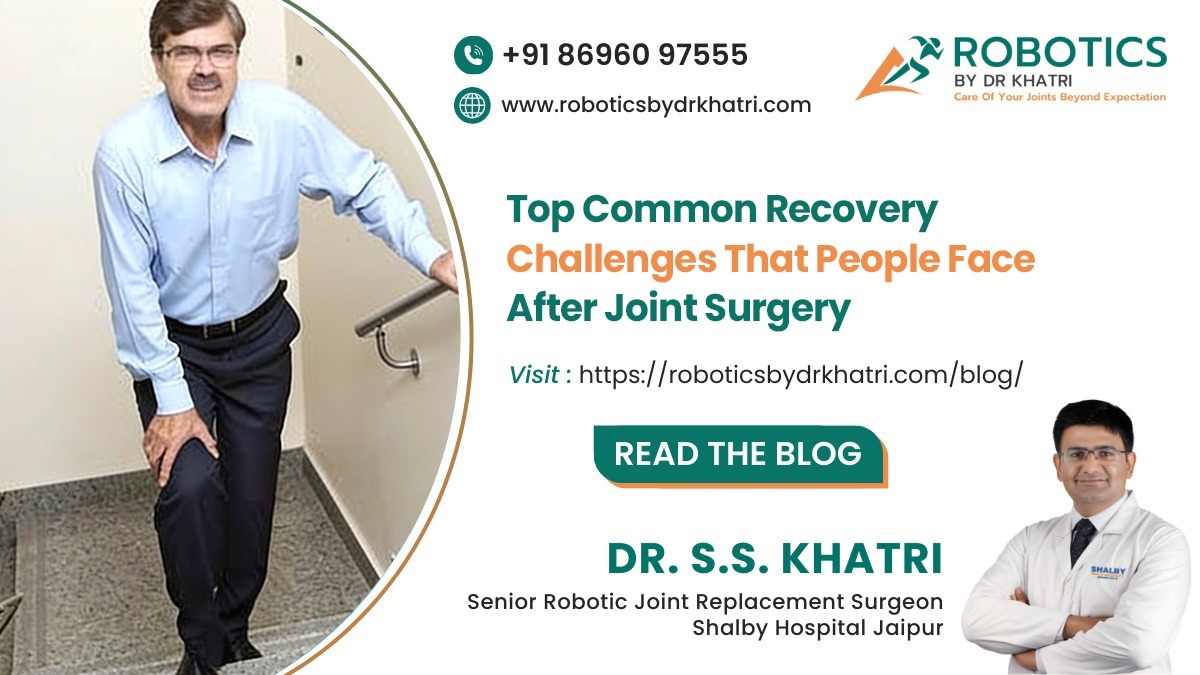
Joint surgery is often a new beginning in many ways for patients who have been suffering from joint problems for quite some time, to the extent that the joint pain has started to affect their daily activities. Selecting the best knee surgeon in Jaipur can be very comforting for patients as they go under the knife, but recovery is also an equally important part of this process. Even if everything works well in the operation theatre, recovery might sometimes not be smooth. Surgery recovery process cannot be described as linear because it is not. The whole thing consists of various stages; sometimes things will be good, while at other times they won’t and that is absolutely fine. It is natural for one to feel swollen, stiff, sore, and weak after surgery as well as having difficulty moving around due to changes in joint function. Your body is healing and adapting all at once, which is why you may face common challenges during this time. Various Common Recovery Challenges That People Face After Joint Surgery Rehabilitation after joint replacement surgery is unpredictable. No matter how good the operation is performed, there is still time for the body to adapt itself back. There will be some good days and days that may seem slower than hoped for. • Pain and swelling that come in waves After joint surgery, pain will come in waves; there will be good days and bad days with pain, sometimes depending on the days following physical therapy or any activities done. Sometimes, there will be days when swelling is felt, followed by good days where the swelling subsides. Think of it like roadwork: even after repairs, there’s still cleanup and settling to do. • Muscle weakness that surprises people This often surprises patients. Even after having your joint operated on, the muscles around it may become weak because you don’t use them enough. It’s like fitting your car with a high-performance engine while its tires are deflated; everything works fine, but it’s not quite smooth sailing. That’s why having an effective rehabilitation program designed by the best knee replacement surgeon in Jaipur is key to your recovery. • Sleep disruption during early recovery Sleep doesn’t always come easily in the first few weeks. Discomfort, adjusting positions, or even just being more aware of the healing joint can interrupt normal rest cycles. And when sleep is off, everything else feels harder, pain tolerance drops, fatigue increases, and motivation dips. It’s one of those ripple effects people don’t always expect going in. • Getting back to normal activities too soon This is a common challenge, especially when people start feeling better. The temptation is to return to routine quickly, walking more, skipping rest, pushing activity levels. But the joint is still rebuilding strength and stability underneath. It’s a bit like painting a wall that looks dry on the surface but is still curing beneath. Too much stress too early can slow everything down. • Stiffness that feels harder in the morning Morning stiffness is a common post-surgery complaint. After being inactive, joints can feel “stuck” and awkward at first, but gradually loosen up. This isn’t about damage, but rather circulation and lubrication. Regular movement during the day helps improve this, even if it starts slowly. Conclusion Recovering from joint surgery takes time, not necessarily because the recovery process is lengthy but because it requires a constant effort. The presence of pain, tightness, muscle weakness, and inconsistencies are expected. Through regular rehabilitation, patience, and the guidance of a professional surgical team, one can easily overcome such difficulties.

The Hidden Reasons Your Joint Pain Is Getting Worse: What You Need to Know

Joint pain has a sneaky way of escalating. One month, it’s just a little stiffness when you wake up, and before you know it, stairs feel like a negotiation, and even sitting too long makes things worse. A lot of people jump straight to searching for a knee surgeon in Jaipur, especially when the pain starts affecting daily movement, but the real story is often more layered than a single fix. It usually builds over time through small triggers, old injuries, posture habits, weak supporting muscles, or even the way we distribute weight without noticing. Joint problems may be rather complicated due to the existence of numerous factors contributing to them. Indeed, they operate in a chain manner where if one side makes efforts to compensate, another joint comes into play. Thus, all the body joints become interconnected. Factors such as prolonged periods spent in one position, failing to prepare adequately for physical exercise, and neglecting initial pains contribute to the emergence of serious joint problems that restrict motion. Various Reasons Your Joint Pain is Still Getting Worse The pain in joints usually increases slowly, not immediately. Little things, injuries, or daily stress pile up to make the pain chronic and affect the ability to walk, sit, or even sleep. • Every day wear and tear that builds quietly Joint pain normally starts with small repetitive stress on the body and not from an injury. Minor things such as walking with uneven gait, sitting for long periods or sitting in an unequal way might lead to joint pain. In the same way that a chair with a screw loose becomes worse as you sit on it, joint stress also builds up. • Weight and joint pressure over time The excess weight is not only responsible for adding to static pressures but also to dynamic pressures, particularly in the weight-bearing joints such as knees. Actions like walking, running up and down the stairs, or even getting out of a chair contribute greatly to this dynamic pressure, which causes faster wear and tear of cartilage over time. This may be one of the causes that force someone to visit a knee replacement surgeon in Jaipur. • Old injuries that never fully settled An old injury such as a strain or sprain might not fully heal, which could lead to compensations in your gait or movement pattern. Such changes in movement may influence the force distribution in the joint, causing new pain associated with an old injury. • Lifestyle habits that quietly make things worse Staying seated for too long, not moving around, and not even engaging in slight activities does not necessarily sound dangerous. However, for us to be able to maintain healthy joints, we must move them around. Failure to do so will mean that joint fluid is reduced, leading to stiffness and muscle weakening. You don’t need intense workouts to make a difference. Regular walking or light mobility exercises can significantly help over time. • Muscle weakness that shifts the load Joints rarely fail on their own; they often become overloaded when surrounding muscles weaken. For example, if the muscles in the thighs or hips become weak, the knees make up for it, exerting pressure with each step, particularly on staircases or uneven terrain. This will lead to pain initially only after any physical activities. It’s like a bridge with insufficient support beams: it remains standing, but the pressure is unevenly distributed. Conclusion Joint pain getting worse usually isn’t about a single problem. Its layers, movement habits, muscle strength, past injuries, and daily strain are stacking up over time. The earlier you notice those patterns, the easier it is to slow things down and keep mobility intact without letting discomfort take over daily life.

Knee Pain after 50: A Guide to Advanced Surgical Options

As we grow older, a little stiffness in the knees often feels like a normal part of life. Many of us ignore the occasional pain, blaming it on age, weather changes, or years of hard work. But do you know that persistent knee pain after 50 is not something you always have to live with? Thanks to modern medical advancements, there are now highly precise treatment options that can help people regain mobility and live pain-free lives. It means if you are struggling with persistent knee pain, consulting an experienced knee surgeon in Jaipur can help you understand the most suitable treatment options and take the right steps towards a healthier, more active future. Why Does Knee Pain Become Common After 50? We all know that our joints go through years of wear and tear. Over time, the cartilage that cushions the knee joint starts to wear away, leading to conditions such as osteoarthritis. This is one of the most common causes of knee pain in people over 50. Apart from arthritis, knee pain may also occur due to: • Age-related degeneration of joints • Previous injuries or fractures • Obesity, which puts additional pressure on the knees • Rheumatoid arthritis and other inflammatory conditions • Weak muscles and reduced physical activity Initially, the pain may appear only while climbing stairs or walking long distances. However, as the condition progresses, the discomfort may become constant and begin to interfere with everyday activities. When Should You Consider Surgery? Many of us are unaware that knee replacement surgery is not the first treatment option. Doctors usually recommend medications, physiotherapy, weight management, and lifestyle modifications before suggesting surgery. However, surgery may become necessary when: • Knee pain persists despite conservative treatments • Walking, standing, or climbing stairs becomes difficult • The knee joint becomes intensely damaged due to arthritis • Pain can impact sleep and overall quality of life • There is significant stiffness or deformity in the knee If these symptoms sound familiar, it may be time to discuss advanced surgical options with your doctor. What Is Robotic Knee Replacement Surgery? Robotic knee replacement is one of the most advanced innovations in orthopaedic care. Contrary to what many people think, the robot does not perform the surgery independently. Instead, it assists the surgeon by providing highly accurate planning and real-time guidance during the procedure. The robotic system creates a detailed 3D model of the patient’s knee. This helps the surgeon precisely remove damaged bone and place the implant in the most suitable position. The result? Better alignment, improved joint function, and potentially longer-lasting outcomes. Is Robotic Surgery the Ideal Choice for Everyone? The answer is no. Robotic surgery is a great option for many patients, especially those suffering from advanced arthritis or severe knee joint damage. However, factors such as age, bone quality, overall health, and the extent of joint degeneration play an important role in determining whether this approach is suitable. A detailed evaluation by an experienced orthopaedic specialist is essential before making any decision. Benefits of Robotic Knee Replacement Patients who undergo robotic-assisted knee replacement may experience several advantages, including: • Greater surgical precision • Minimal damage to surrounding tissues • Improved implant positioning • Reduced post-operative pain • Faster recovery and rehabilitation • Better knee movement and functionality Most importantly, many patients can return to their daily routines with renewed confidence and significantly less pain. The Conclusion Knee pain after 50 does not have to define your life. While occasional discomfort can be managed with lifestyle changes and medications, persistent pain that limits your movement deserves expert attention. Robotic knee replacement has transformed the way knee surgeries are performed, offering greater precision and better outcomes for eligible patients. So, if you or your loved one is struggling with chronic knee pain, don’t wait for the condition to worsen. Take the first step towards an active and pain-free future with Dr Khatri, the best orthopaedic surgeon in Jaipur. Book a consultation today and discover whether robotic knee replacement is the right choice for you. It’s because every step matters, and with the right care, you can keep moving forward with confidence.

What Is Robotic Joint Replacement and How Does It Improve Accuracy?

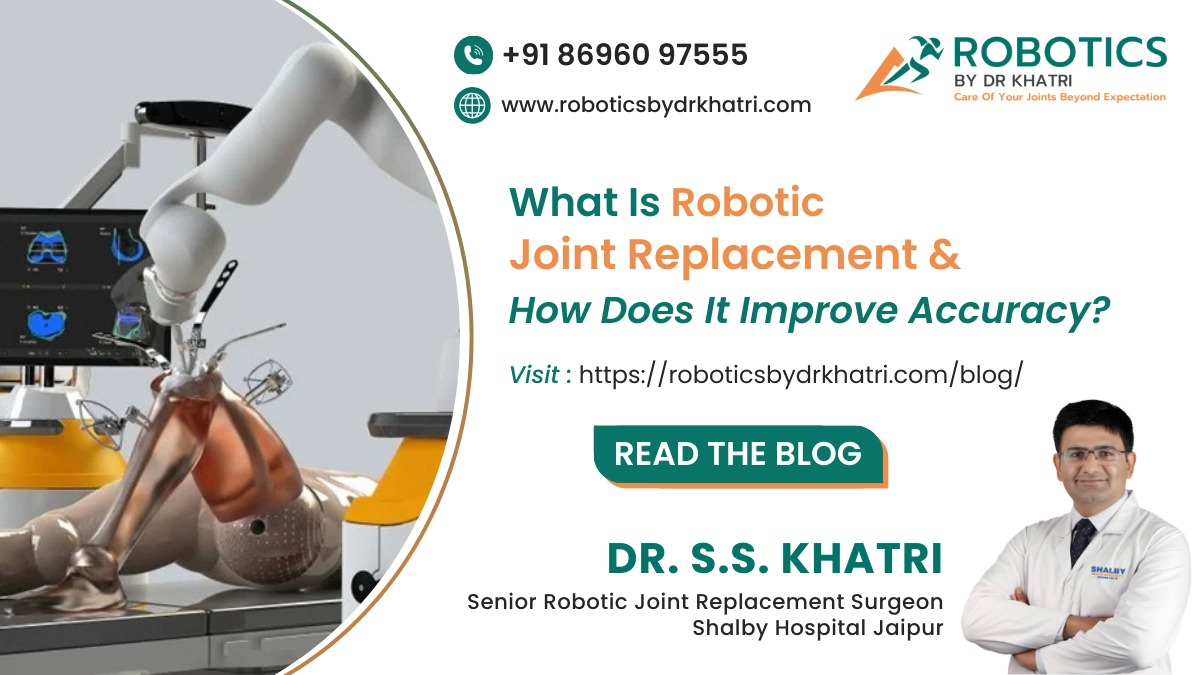
Joint replacement has transformed countless lives by offering better movement and quality of life. But traditional knee replacement can involve a very long recovery, which in itself may make people think twice about doing it. Thankfully, advancements in technology have developed a new option: robotic joint replacement. This method has changed how the surgery is performed. If you’re thinking about a knee replacement, a skilled robotic knee replacement surgeon in Jaipur can help you achieve a successful result. But what is robotic joint replacement? Robotic-assisted joint replacements use 3D planning before surgery and computer guidance during the operation. With robotic tools that provide feedback, surgeons can carefully remove damaged bone and cartilage and fit artificial joints more accurately. This process also helps to save healthy tissue. During surgery, the robotic system provides real-time feedback and precise guidance. It helps surgeons in the proper execution of plans. The technology ensures that there are exact bone cuts, correct implant placements, and proper joint alignments. It, therefore, limits mistakes and minimizes risks. Patients benefit through better joint functionality, longer-lasting implants, and predictable surgical outcomes.

Various Ways to Improve the Accuracy of Robotic Joint Replacement

Robotic joint replacement aids surgeons in accurately placing implants through advanced imaging and computer-guided planning. This results in better alignment, improved joint function, and more reliable outcomes.

Patient-specific 3D surgical planning

In a robotic joint replacement surgery, advanced images are taken through a process such as a CT scan or even an X-ray. The images provide a 3D representation of the patient’s own joint. With this precision, surgeons can easily determine the best size and design to match the patient’s own anatomy, providing the patient with a perfect solution to their own joint difficulties. If you are planning to do a robotic knee surgery, then do it in a clinic that specializes in the best knee replacement surgery.
  • Millimeter-level precision
The robotic technology that is changing surgery is one that allows for an incredible level of accuracy in bones or implants. Such an advanced procedure is one made with very precise measurements, where everything is done with great precision. Such precision is usually better with the robotic system compared to the traditional methods used in surgery.
  • Improved implant alignment and balance
Proper implant positioning is quite important in order to maintain joint stability and facilitate smooth movement. The integration aspect concerning robotic assistance in joint positioning provides accurate positioning with the aim of attaining optimal balance in the soft tissue. The meticulous positioning of the implant helps in maintaining joint stability as well as reducing wear and tear in the future.
  • Preservation of healthy bone and tissue
Robotic systems help protect nearby bone and soft tissue by cutting only in specific areas. This careful approach improves surgical precision and makes it easier to rebuild joints effectively. As a result, patients have better overall outcomes.
  • Real-Time intraoperative guidance
As this process takes place, it also promotes a sense of feedback to the surgeon, helping them understand the process while acting like an advisor to them, helping them coordinate every single move appropriately with their surgical plan, allowing them to act intentionally in their process of performing a very complex operation. Ref: Robotic-Assisted Joint Replacement

Conclusion

Robotic joint replacement significantly enhances accuracy through personalized planning, real-time guidance, and precise execution. These advancements ensure optimal implant positioning, elevate joint performance, and deliver more reliable long-term outcomes for patients.

Common Myths About Robotic Surgery — Busted by Experts!

Technology is an integral part of our lives. The progress it has attained in the last few decades is remarkable. All sectors rely primarily on technology. The medical industry falls into this category, as it largely depends on technology.  Did you know that the orthopedic surgical robot market in India generated USD 27.5 million in 2023 and is expected to reach USD 57.3 million by 2030? (Source) This is evidence enough of the popularity of robotic surgery within the country of India. If you are struggling with the effects of arthritis or problems within your knees, the Orthopedic Robotic Surgery in Jaipur is the most effective treatment that will help you regain movement. Robotic surgery is one of the most revolutionary technologies in contemporary medicine, allowing for greater precision, reduced scar tissue, and faster healing time for many surgical procedures. While it is true that a growing number of facilities around the world are embracing this innovation, there exist many myths about it among the community, particularly the patients. These myths arise generally because of a misunderstanding of the innovation and its usage by surgeons. This article aims to give you a clearer explanation of such myths and their bases. We shall begin with the topic. Shall we?

Various Common Myths about Robotic Surgery

Knowing about robotic surgery is essential for making informed healthcare decisions. Robotic surgery is a tool used by trained surgeons; it is not a robot that acts on its own. Clearing up misunderstandings about robotic surgery can help patients feel more confident about it.

1. Robots perform surgery without a surgeon’s presence.

In reality, robotic surgery is robot-assisted surgery in which the surgeon maintains all control. The surgeon controls the robot outside the body, and the robot replicates those movements inside, creating a master-slave relationship. The robot enhances the surgeon’s abilities. For robotic surgery to be successful, the surgeon’s experience and skill are essential. Are you experiencing a ligament or sports injury? Then you should consult the best orthopedic robotic surgeon in Jaipur, who is supervised by a skilled physician. Also, you will get relief soon.

2. Robotic surgery is riskier.

Robotic surgery is not riskier than traditional surgery by nature. Robotic surgery often decreases the risk associated with open surgery procedures like the risk of bleeding, infection, and complications associated with a large incision wound. Robotic surgery equipment provides the surgeon the ability to perform the procedure accurately and offers a high-definition three-dimensional vision system that minimizes the chances of human errors.Like any operation, the risks are determined by the patient’s condition and the surgeon’s skill, not by the technology.

3. It is way too expensive.

One common argument against the widespread use of robotic surgery is its high cost. Robotic systems may ultimately deliver cost savings, even if their initial setup and maintenance are costly. Shorter hospital stays, reduced postoperative care, and fewer complications may mitigate the initial expense.

4. This surgery is only experimental.

Robotic surgery is also considered to be a safe and effective procedure, according to many studies. It is also efficient for various types of surgery and has been shown to have fewer complications than open surgery. It is also evident that patients have better outcomes with robotic surgery compared to older surgical methods. If you are planning orthopedic robotic surgery but are confused, the best Orthopedic Surgeon in Jaipur can help.

5. The recovery process is longer in robotic surgery.

Some patients believe that using cutting-edge technologies may lead to a longer recovery period. However, the reverse is also true: recovery times are shorter. Robotic procedures require less recovery time than conventional techniques since they are minimally invasive and cause little to no damage to the surrounding tissues.

Conclusion

Robotic surgery fears are primarily based on myths and not factual information. When experienced surgeons perform robotic surgery, they enhance accuracy and safety. This promotes positive results and rapid recovery. With this understanding, the patient is able to make well-informed decisions rather than being clouded with misconceptions concerning the technology as well as its functioning. Taking the advice of the expert ensures that the patient embarks on robot-assisted surgery without fear but confidence.